ORDER YOUR COPY:
|
| Reviews |
This is a perfect reference for Primary Care. I would highly recommend to everyone interested in substance use disorders but especially in Primary Care physicians and nurses.
|
|
|
|
| Books by H. Thomas Milhorn, MD, PhD |
| r t |
|
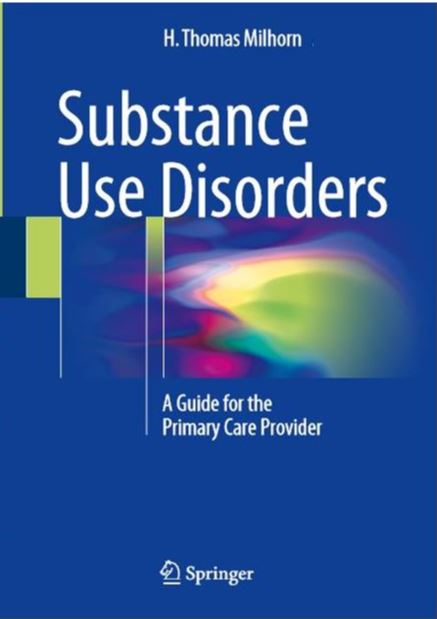
Substance Use Disorders: A Guide for the Primary Care Provider
ISBN-10: 3319630393,
ISBN-13: 978-3319630397
This book was written for primary care physicians, who almost daily come into contact with substance dependent individuals and their families. However, it also should be helpful to primary care nurse practitioners and physician assistants, as well as medical students, primary care residents, emergency medicine physicians, ASAM and APA certified addictionists and those studying for certification in those specialties, psychiatrists, psychologists, and alcohol/drug counselors.
Primary care physicians are in excellent positions to diagnose substance use disorders and to help the families of these patients get them into treatment. In addition, primary care physicians can detoxify patients as needed. On return from treatment, they can participate in the patients’ recovery programs to help prevent relapse.
The book is divided into four parts: (1) The Basics, (2) Psychoactive Substance Dependencies, (3) Diagnosis, Treatment, Recovery, Relapse, and the Family, and (4) Special Groups.
Part I (The Basics) consists of an overview, the various definitions of substance dependence, and the pharmacology of addictive substances. Chapter 1 ”Overview” is an introductory chapter that covers material common to the entire field of substance dependence, such a classification of psychoactive substances based on their effects on the central nervous system, primitive survival brain concept, criteria for substance dependence, addiction medicine specialists, denial, abstinence syndromes, 12-step programs, prescription drug addiction, and DEA drug schedules. Chapter 2 covers the various definitions of substance dependence, and Chapter 3 covers the pharmacology of addictive substances.
Part II (Psychoactive Substance Dependencies) covers the various drug dependencies—alcohol dependence, sedative-hypnotic dependence, opioid dependence, stimulant dependence, nicotine dependence, cannabis dependence, dissociative dependence, inhalant dependence, hallucinogen dependence, and anabolic steroid dependence.
Part III covers diagnosis, treatment, recovery, relapse, and the family.
Part IV (Special Groups) covers women, adolescents, the elderly, ethnic minority groups, co-occurring disorders, LGBT patients, HIV positive patients, and the impaired physician. |
Part I: The Basics
Chapter 1. Overview
- The Problem
- How Psychoactive Drugs Differ from Other Drugs
- Classification of Psychoactive Substances Based on their Effects on the Central Nervous System
- Club Drugs and Date Rape Drugs
- The Primitive Survival Brain Concept of Substance Dependence
- Denial
- Addicted versus Addict
- Abstinence Syndromes
- The Beginning of All 12-Step Programs
- The Prescription Drug-dependent Patient
- Addiction Medicine Specialists
- DSM-5 Criteria for Substance Dependence
- DEA Drug Schedules and Prescribing Regulations
Chapter 2. Substance Dependence Definitions
- Biopsychosocial Definition of Substance Dependence
- Biological Factors
- Psychological Factors
- Sociological Factors
- Disease Concept Definition of Substance Dependence
- Genetic Studies
- Natural Course of Alcoholism
- The Disease Concept and the Primary Care Physician
- AMA’s Definition of Substance Dependence
- ASAM’s Definition of Substance Dependence
Chapter 3. Pharmacology of PsychoactiveSubstances
- Pharmacodynamics
- Receptors
- Synapse
- Reward Center of the Brain
- Neurotransmitters Affected by Psychoactive Substances
- Upregulation and Downregulation
- Dose-response Relationships
- Kindling
- Pharmacokinetics
- Route of Administration
- Enzymatic Reactions
- Steady State Relationships
- Tolerance
- Physical Dependence and Abstinence Syndrome
- Set and Setting
Part II. Psychoactive Substance
Dependencies
Chapter 4. Alcohol Dependence
- Forms of Alcoholic Beverages
- Prevalence of Alcohol Use and Dependence
- Street Names for Alcohol
- Pharmacology
- Interaction of Alcohol with other Drugs
- What Is Excessive Drinking?
- Subtypes of Alcoholism
- Health Risks
- Health Benefits of Drinking Alcohol
- Evaluation of the Alcoholic
- Tolerance
- Dependence
- Abstinence Syndrome
- Ethanol Toxicity
- Recovery
- Other Alcohols
Chapter 5. Sedative-hypnotic Dependence
- Barbiturates
- Benzodiazepines
- Z Drugs
- Gamma Hydroxybutyric Acid
- Sedative-Hypnotics of Historical Interest
- Meprobamate
- Chloral Hydrate
Chapter 6. Opioid Dependence
- Prevalence of Use
- The Opioids Drugs
- Pharmacology
- Opioid Agonists
- Opioid Agonist-antagonists
- Opioid Partial Agonists
- Opioid Antagonists
- Designer Drugs
- Street Names
- Health Risks
- Tolerance
- Dependence
- Abstinence Syndrome
- Opioid Overdose
Chapter 7. Stimulant Dependence
- Prevalence of Use
- The Amphetamines
- Cocaine
- Methylphenidate
- Phentermine
- Modafinil
- Bath Salts
- Flakka
- Caffeine
Chapter 8. Nicotine Dependence
- Tobacco
- Cigarettes
- Factors that Influence Who Will Smoke Cigarettes
- Health Risks
- Benefits of Quitting Smoking
- Electronic Cigarettes
- Cigars and Pipes
- Smokeless Tobacco
- Tolerance
- Dependence
- Abstinence Syndrome
- Quitting Smoking
- Nicotine Dependence Medications
- Weight Gain
- Relapse
- Overdose
Chapter 9. Cannabis Dependence
- Prevalence of Use
- Marijuana
- Cannabis Indica
- Synthetic Cannabinoids
- Hashish
- Hash Oil
- Tolerance
- Dependence
- Abstinence Syndrome
- Toxicity
- The Five Rules of Recovery
- Partial Recovery
- Controlled Drinking
- Drugs That May Be Hazardous to Recovery
- Rational Use of Medications in Recovery
- Support Groups
- Web-Based Recovery Support |
Chapter 10. Dissociative Drug Dependence
- Phencyclidine (PCP)
- Ketamine
- Dextromethorphan
Chapter 11. Inhalant Dependence
- Prevalence of Use
- The Inhalant Drugs
- Solvents and Aerosols
- Gases
- Alkyl Nitrites (Amyl Nitrite, Butyl Nitrite)
Chapter 12. Hallucinogen Dependence
- Prevalence of Use
- The Hallucinogens
- Lysergamides
- Phenylethylamines
- Amphetamine-related Hallucinogens
- Other Hallucinogens
- Street Names
- Hallucinogen Persisting Perception Disorder
- Tolerance, Dependence, and Abstinence Syndrome
- Overdose
Chapter 13. Anabolic Steroid Dependence
- Prevalence of Use
- The Anabolic Steroids
- Street Names
- Pharmacology
- Tolerance
- Dependence
- Abstinence Syndrome
- Drugs Used to Mask Anabolic Steroid Use
- Alternatives to Anabolic Steroids
Part III: Diagnosis, Treatment, Recovery, Relapse, and the Family
Chapter 14. Diagnosis
- Problems in Diagnosis
- Making the Diagnosis
- Screening Questionnaires
- Personal and Family History
- Patient Presentation
- Physical Examination
- Laboratory Tests
- Drug Screening
- Mixed Drug Dependencies
- Presenting the Diagnosis
- Summary
Chapter 15. Treatment
- History of Substance Dependence Treatment
- Getting the Addict into Treatment
- Treatment Program Options
- ASAM Patient Placement Criteria for the Treatment of Substance-Related Disorders
- Support Groups
- Inpatient Treatment
- Outpatient Treatment
- Therapeutic Communities and Halfway Houses
- Support Groups as Primary Treatment
- Aftercare
- Confidentiality
- The Primary Care Physician
Chapter 16. Recovery
- Recovery Dimensions
- Tasks of Recovery
- The Recovery Process
- Pharmacological Approaches
- Alcohol Dependence
- Opioid Dependence
Chapter 17. Relapse
- The Relapse Syndrome
- Major Kinds and Stages of Relapse
- Factors Contributing to Relapse
- Preventing Relapse
- What to Do When Relapse Occurs
- Primary Care Physician’s Role in Preventing Relapse
Chapter 18. The Family
- The Healthy Family
- The Addicted Family
- Getting the Addict Sober
- Getting the Family Well
- The Family in Recovery
- Adult Children of Alcoholics
Part IV. Special Groups
Chapter 19. Women
- Gender Differences
- Prevalence of Use
- The Drugs
- Diagnosis
- Treatment
- The Pregnant Addict
- The Fetus
- Breast Feeding
- Aftercare
Chapter 20. Adolescents
- The Normal Adolescent
- The Substance Dependent Adolescent
- Denial
- Diagnosis
- Getting the Adolescent into Treatment
- Treatment
- Aftercare
Chapter 21. The Elderly
- Prevalence of Use
- Pathophysiology of Aging
- The Elderly Addict
- Diagnosis
- Treatment
- Evaluation
- Detoxification
- Rehabilitation
- Aftercare
Chapter 22. Other Groups
- The Ethnic Minority Groups
- American Indians/Alaska Natives
- Asian/Pacific Islander
- African Americans
- Hispanic Americans
- Co-occurring Disorder Patients
- LGBT Patients
- HIV Positive Patients
Chapter 23. The Impaired Physician
- Prevalence of Use
- Characteristics of the Impaired Physician
- The Impaired Woman Physician
- Physician Health Programs
- Intervention by Confrontation
- Treatment
- Aftercare
- Recovery |
|